




SEO Content Checklist: Everything To Check Before Publishing

August 17, 2026
Ignoring keyword optimization, search intent, E-E-A-T, and other key SEO factors before publishing content can make it harder to rank on Google and appear in AI Overviews. However, blog posts are among the top 5 highest-ROI content formats for marketers. But it can feel frustrating to put so much effort into creating engaging content only to see it fall short of the desired results.
Google keeps changing its algorithms, which impacts SEO practices. So, if you’re not following the latest SEO checklist for content writing, you’re probably going to miss key factors that help your content perform well in search results. This detailed guide about the SEO content checklist can help you identify and fix gaps that may hold your content back from SERPs.
A Comprehensive SEO Checklist for Content Writing
An SEO content checklist is a pre-publish review covering topic selection, keyword research, content structure, on-page optimization, E-E-A-T, image optimization, answer-first formatting, CTAs, internal/external linking, and content freshness. Skipping any one factor reduces a page’s chance of ranking or being surfaced in AI Overviews.
The SEO content checklist below covers all the essential factors you need to review before publishing.
-
Find Valuable Topics in Your Niche
The first step in an SEO content checklist is topic selection: choose subjects that address genuine audience demand, answer real user questions, and align with your brand’s expertise — not topics with no proven search or business relevance.
How to find valuable SEO content topics
- Address audience questions and pain points
- Stay within your industry or product scope
- Keep track of emerging trends, changes, and discussions.
- Validate ideas using Semrush, Google Keyword Planner, or Google Trends..
Choosing a topic that meets these criteria gives your content a stronger chance of attracting relevant traffic, satisfying users, and performing well in search results.
-
High-Intent Keyword Research
High-intent keyword research means selecting keywords that match what a searcher wants to accomplish, then placing them naturally in the content instead of repeating them artificially.
How to do Effective Keyword Research?
- Choose a primary keyword that has a decent search volume.
- Pick your secondary keywords from the People Also Ask Section on Google.
- Understand the user’s search intent behind keyword research.
- Evaluate keywords based on their traffic potential and competition.
Make sure another page on your website is not already targeting the same keyword and search intent, as it can create unnecessary competition between your pages.
-
Build a Well-Organized Content Structure
Well-structured content uses clear headings, short paragraphs, and scannable formatting, which helps search engines, readers, and AI Overviews parse a page’s key points quickly.
How to Create Structured Content?
- Divide your content into clear logical headings and subheadings.
- Add bullet points and numbered lists to make key information easier to scan.
- Use tables when comparing products, features, prices, and statistics.
- Keep paragraphs short and focused to improve readability.
Make sure each section naturally leads to the next, removes unnecessary information, and follows a logical journey that keeps readers engaged until the end.
-
Optimize Structural Elements of Content
On-page optimization means adjusting title tags, meta descriptions, headings, and URLs so both search engines and users understand a page’s topic at a glance. Each should include the primary keyword naturally, while making navigation easier for users.
How to Optimize Content Structure?
- Include the primary keyword naturally in title tags, H2, and H3.
- Use a clear H1 heading that accurately describes the main topic.
- Create an engaging meta description that attracts users to click.
- Keep your URL short, descriptive, and relevant to the content.
Check how your page appears in search results before publishing. Your title and meta description should accurately represent the content and create a clear reason for users to click.
-
Strengthen Your Content With E-E-A-T
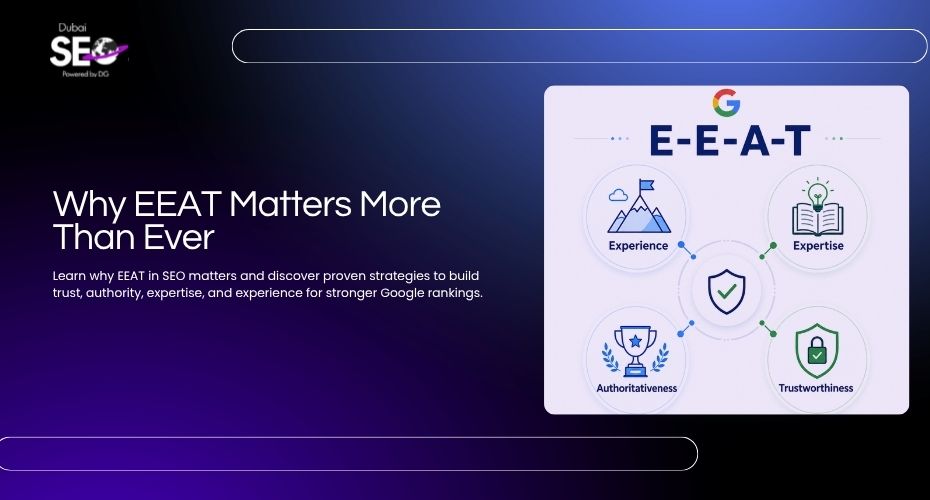
E-E-A-T stands for Experience, Expertise, Authoritativeness, and Trustworthiness — Google’s framework for evaluating content credibility. Content builds E-E-A-T through first-hand experience, demonstrated subject-matter expertise, authoritative backlinks or mentions, and transparent, accurate sourcing.
How to Build E-E-A-T into Content?
- Share real stories, case studies, and testimonials to build trust.
- Earn backlinks from reliable websites, media outlets, and industry publications.
- Support your claims with data, research studies, or industry sources.
- Display transparent author credentials and clear content ownership.
Instead of repeating information already available online, include expert opinions, first-hand observations, unique examples, or practical recommendations that give readers something new.
-
Don’t Forget to Optimize Images
Image optimization for SEO means using descriptive file names and alt text, compressing images for page speed, and choosing modern formats (e.g., WebP) at appropriate dimensions — helping both search engines and users interpret visual content.
What to Consider for Image Optimization?
- Add relevant images to support each major section.
- Compress images to improve page speed and performance.
- Write descriptive alt text and include keywords only when relevant.
- Use original images or properly licensed stock photos.
Check whether every image actually adds value in your content or not. Remove unnecessary visuals, use appropriate dimensions, choose modern formats where supported.
-
Start With Answers to User Queries
An answer-first content structure places the direct answer to a user’s query in the first 1-2 sentences of each section, followed by supporting data and examples. This is the format Google AI Overviews and LLM answer engines most often extract and cite.
How to Create an Answer-First Structure?
- Make sure each section starts with a clear and direct answer.
- Cover the most important information in the first few sentences.
- Support the information with relevant statistics and examples.
- Make sure your supporting details are relevant to the main query.
After answering the main question, cover the important follow-up questions users are likely to have so they don’t need to return to search for another source.
-
Encourage Readers With Clear CTA’s
A call to action (CTA) is a prompt that directs readers toward a specific next step — requesting a quote, downloading a resource, or making a purchase — placed at points in the content where it matches the reader’s current intent.
How to Add CTAs Strategically?
- Choose a CTA that is a logical next step based on the reader’s needs.
- Keep your CTAs clear and concise for immediate user actions.
- Encourage CTA’s by using strong action verbs such as Get, Download, Explore, etc.
- Place CTAs at relevant points in the content where readers take the next step.
A single CTA at the end may not be enough for longer content, while too many CTAs can distract readers, so place them where they naturally support the reader’s next step.
-
Final Content Quality Checks
A final SEO content check confirms: short, readable paragraphs; 2-3 internal links; 1-4 external links to credible sources; and verified facts, statistics, and claims — before publishing.
How to do Final Content Audits?
- Make sure to keep paragraphs short and easy to read.
- Include 2-3 useful internal links from your own website.
- Add 1 to 4 external links to credible, authoritative sources.
- Make sure facts, statistics, examples, and claims are correct.
Check the page on both desktop and mobile, test links and buttons, review formatting, and make sure everything displays correctly after publishing.
-
Update Content for Search Relevance
Content should be refreshed regularly by updating outdated statistics and examples, adding new research, fixing broken links, and consolidating duplicate pages to prevent keyword cannibalization — since competitors’ fresher content can otherwise outrank it.
How to Keep Content Up-to-Date?
- Update outdated information, statistics, and examples.
- Add newer research, studies, and industry insights when available.
- Check and replace broken or outdated links.
- Delete, merge, or de-optimize duplicate content that may cause keyword cannibalization.
If competing pages provide fresher and more relevant information, your content may lose search visibility, so regular audits allow you to keep an eye on your content performance.
Conclusion
SEO content plays an important role in bringing qualified leads into your sales funnel. Each piece of content can keep your audience engaged and guide them toward relevant CTAs when you consistently follow an SEO checklist in content writing. It’s a practical strategy that will help your content be understood by both search engines and users.
Want to grow your brand in Dubai with effective content marketing? Then partner with SEO Dubai Experts, as we create high-quality content strategies designed to attract your target audience and turn search traffic into qualified leads. Talk to our experts today and take your content strategy to the next level.
FAQs
What does an SEO content checklist mean?
An SEO content checklist is a pre-publish list of factors — keyword research, structure, on-page tags, E-E-A-T, images, and links — used to review blog posts, articles, and landing pages before they go live.
Why is E-E-A-T important in content marketing?
E-E-A-T (Experience, Expertise, Authoritativeness, Trustworthiness) is Google’s framework for judging content credibility; weak E-E-A-T signals reduce both rankings and user trust.
What should an SEO checklist for content writing include?
1. Keyword research 2. Search intent 3. Content structure 4. On-page optimization 5. E-E-A-T 6. Image optimization 7. Internal linking 8. AEO 9. CTAs 10. Final quality checks
Why should you add external links to content?
External links to credible, authoritative sources support factual claims, give readers additional context, and strengthen a page’s E-E-A-T signals.
How should you place keywords in content?
Use primary and related keywords naturally in the title, introduction, headings, body, URL, and relevant sections without excessive repetition or forceful stuffing.